[Case 05]
U-NEXT : Redesign Genre-browsing User Experience
VOD service
U-NEXT : Redesign Genre-browsing User Experience
VOD service
[Project Overview]
Redesigned the mobile genre-browsing experience for U-NEXT, a subscription-based VOD platform, to improve content discovery and engagement. Through multiple iterations and user testing, the project evolved from a navigation-focused redesign into a behavior-driven solution aligned with business growth. The final design increased genre page visits by 10–15% within two weeks of release.
My Impact
I led the redesign end to end. I drove design decisions using a combination of qualitative research and quantitative validation, including two rounds of usability and click testing. As the business context evolved, I reassessed earlier solutions rather than reusing them blindly, ultimately delivering a data-validated design that increased genre page visits by 10–15% on iOS.
[Industry]
Video on Demand
[My Role]
Lead Designer
[Platforms]
iOS, Android, Web
[Timeline]
2019-2021
[01. Introduction]
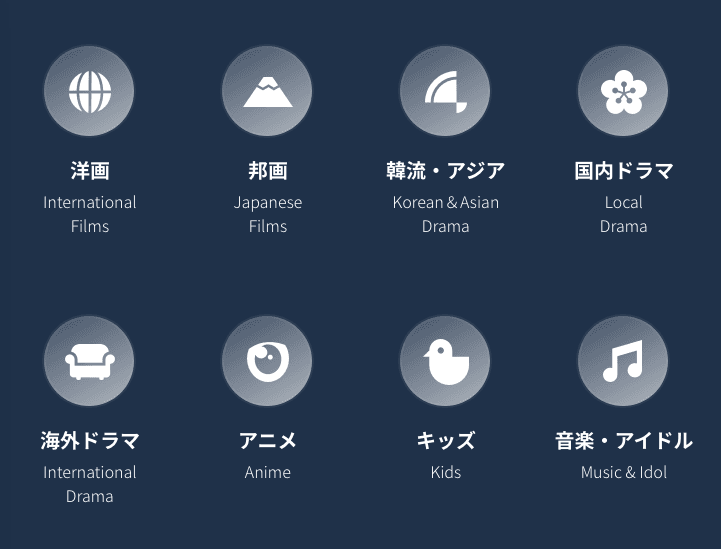
This project focused on redesigning the genre-browsing experience for U-NEXT, aiming to help users reach their favorite content more easily on mobile.
The platform offers 11 different video genres, including international films, Japanese films, Korean & Asian dramas, and more. Besides the Home page, genre top pages serve as one of the primary entry points for users to browse curated content within each genre.
However, internal data and user research revealed a clear gap between platforms:
Visits to genre top pages were significantly lower on mobile apps (iOS & Android) compared to the web experience
During user interviews, several users mentioned that they rarely or never visited genre top pages on mobile
This indicated a usability issue specific to mobile, rather than a lack of interest in genre-based browsing itself.
Challenge
How might we redesign the genre-browsing experience on mobile to make genre top pages easier to access and encourage more frequent exploration?
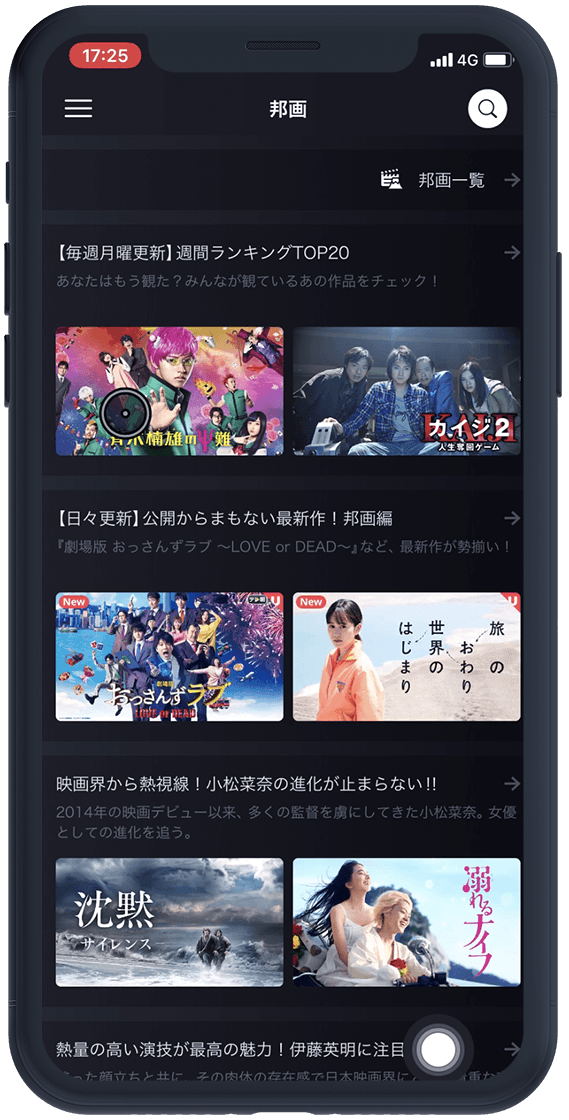
Genre Top Page
[Design Process]
click on each section to fast forward!
[02. Define Problems]
[Why Genre Browsing Matters]
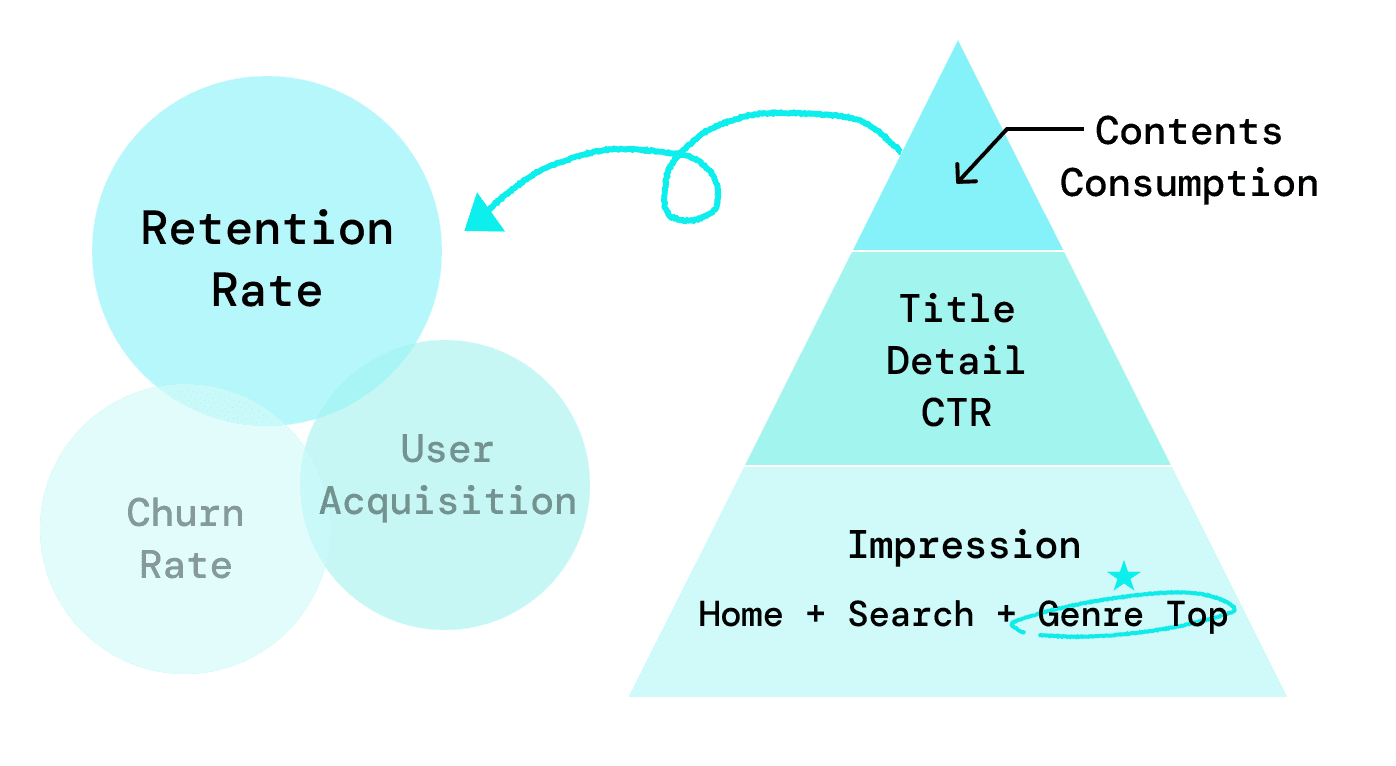
For a subscription-based service like U-NEXT, long-term growth depends not only on acquiring users, but on keeping them engaged and reducing churn.
While User Acquisition, Retention Rate, and Churn Rate are the primary KPIs, they are influenced by a set of more actionable proxy metrics.
Among them, Content Consumption plays a key role, as frequent viewing strengthens perceived subscription value.
Content consumption, however, does not happen in isolation. It is driven by:
Title Detail Click-Through Rate (CTR)
Which is influenced by how often users are exposed to titles (impressions)
Especially through high-impact entry points such as Home, Search, and Genre Top Pages
Despite genre top pages being a major source of curated content, their impressions and visit rates on mobile were significantly lower than expected
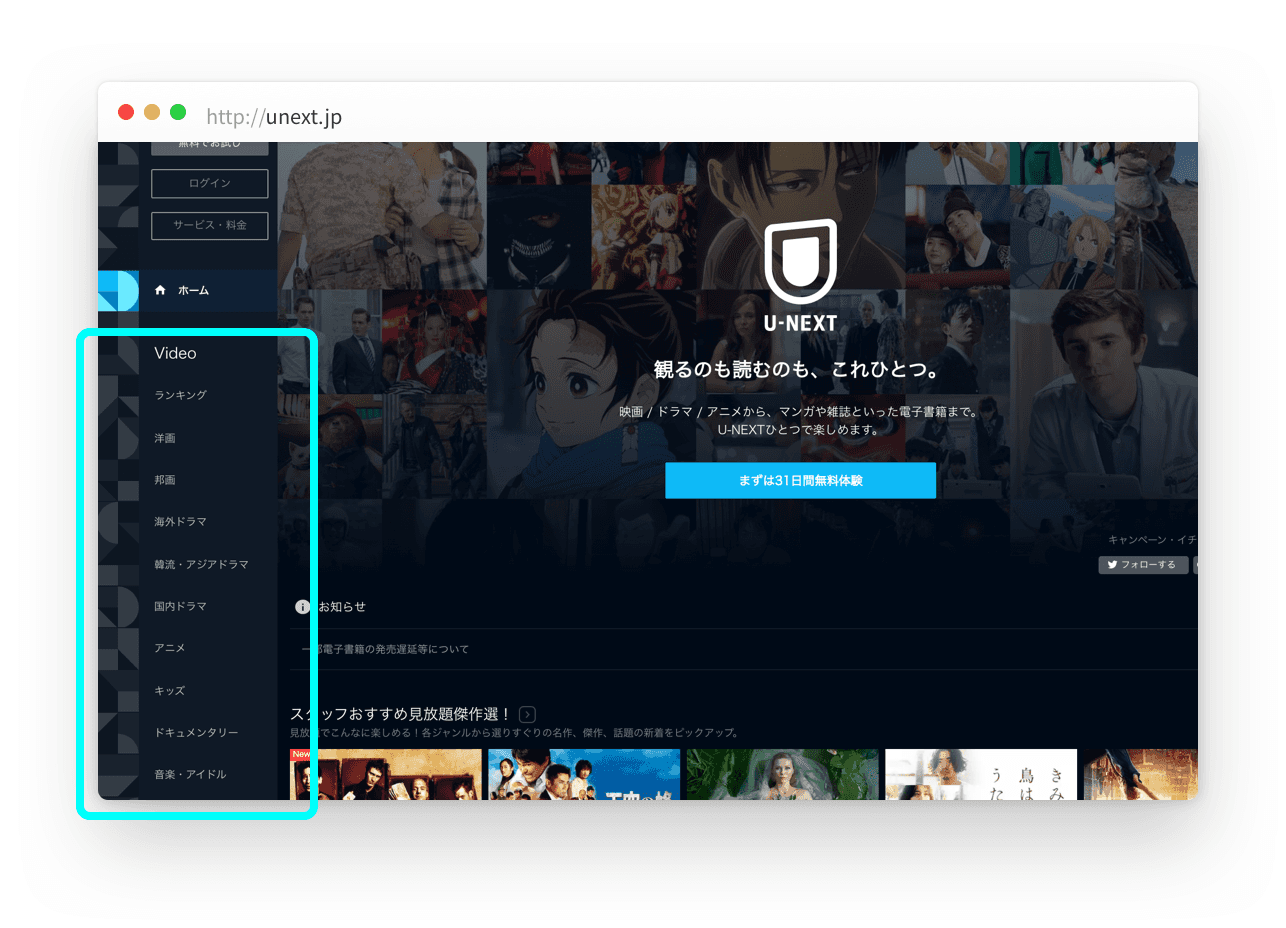
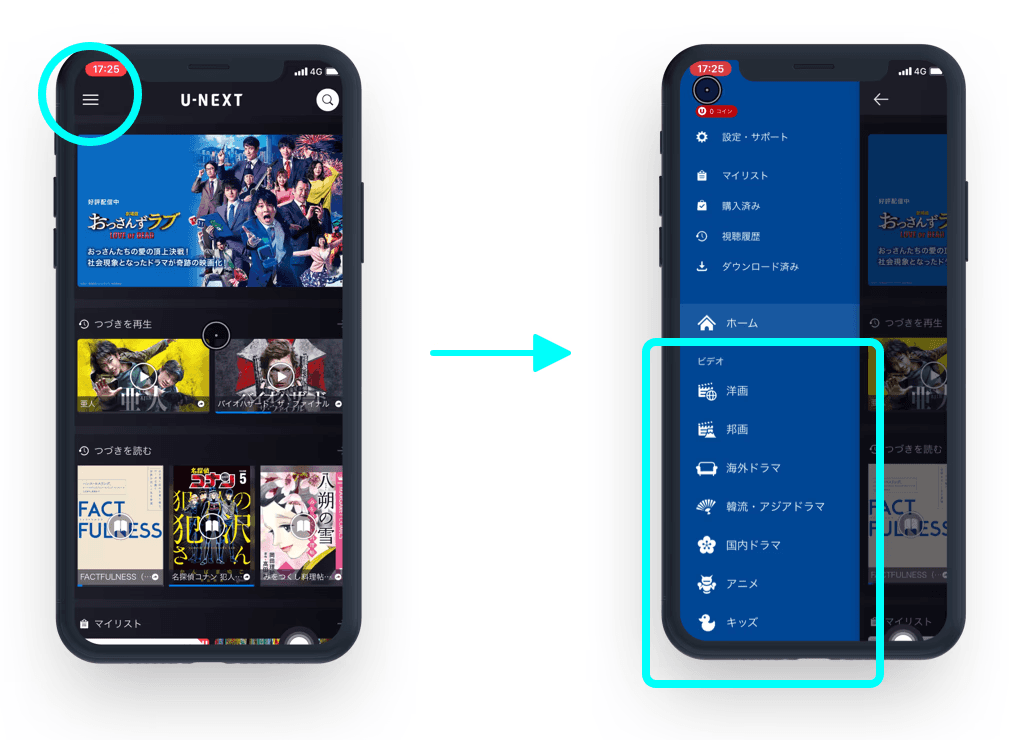
[Side Navigation on Web vs. Hamburger Menu on Mobile]
On the web, genres are displayed as a visible list in the side navigation, allowing users to quickly recognize and switch between genres. This design results in relatively high traffic to genre top pages.
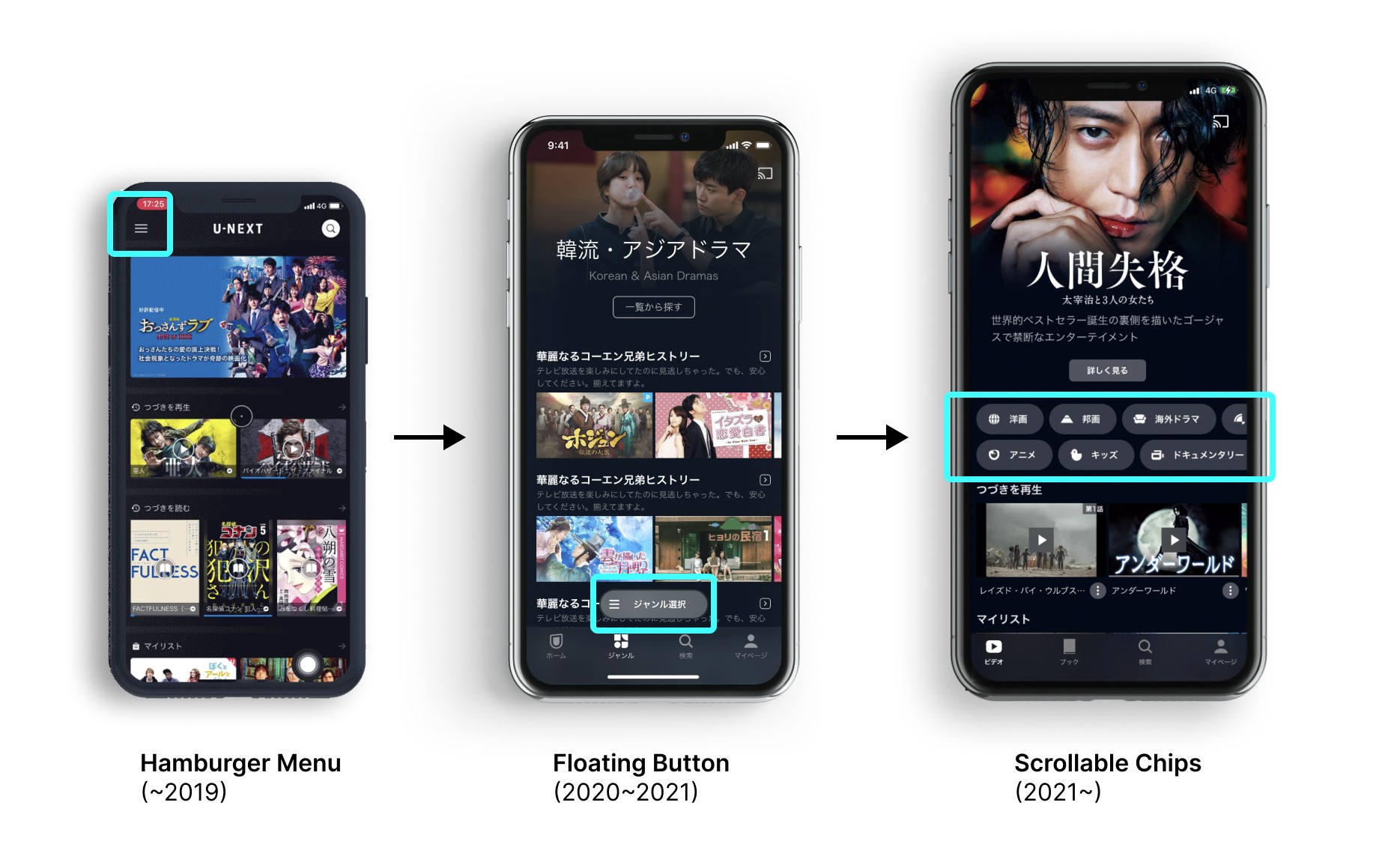
On mobile, however, genres are hidden behind a hamburger menu in the top-left corner, which introduces several issues:
The entry point is less discoverable
Accessing genres requires additional steps
The interaction area is located in a hard-to-reach zone for thumb-based usage
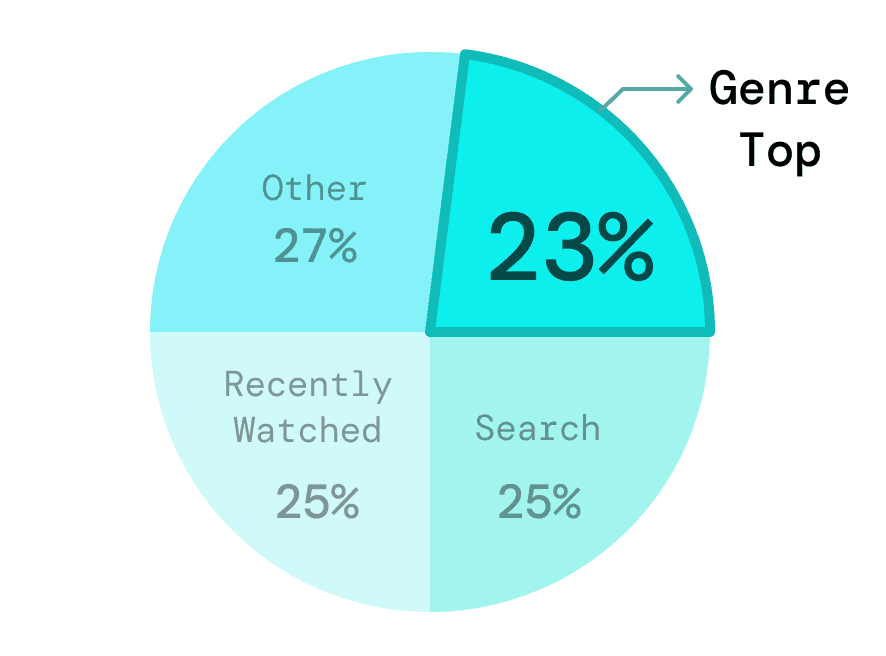
Genre Top CTR on web
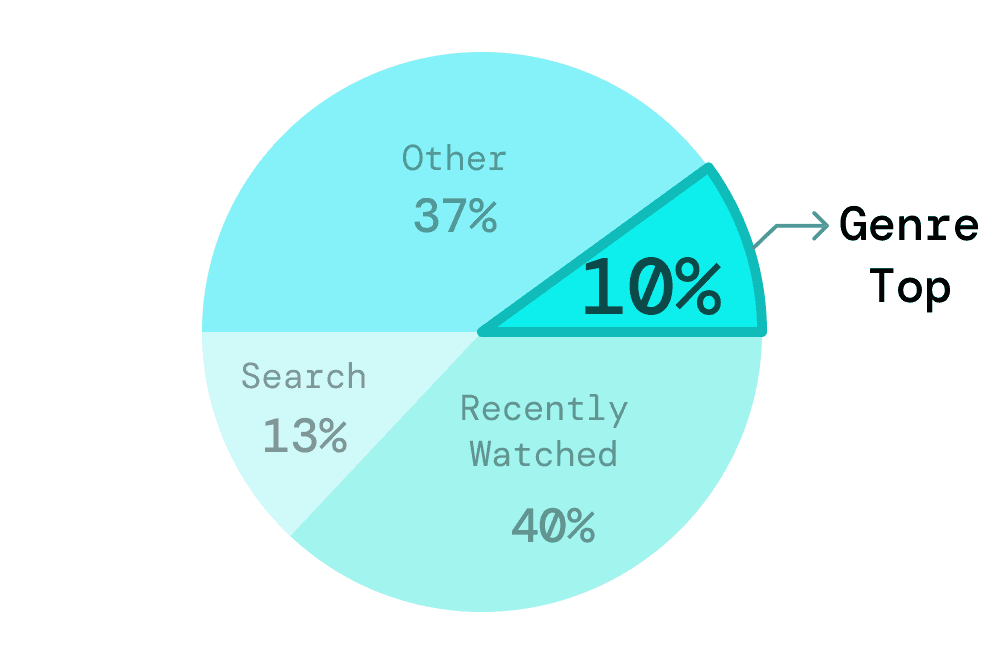
Genre Top CTR on mobile
CTR analysis confirmed this behavioral difference:
genre top page CTR on mobile was consistently lower than on the web, validating that the navigation pattern itself was a key friction point.
[03. Hypothesis]
If we make genre navigation more visible and thumb-friendly on mobile, users will visit genre top pages more frequently, leading to increased content exploration and consumption
We would consider this hypothesis validated if we observed a statistically significant increase in genre top page visits on mobile after the redesign.
[04. Ideation]
Direction:
Reducing reliance on the hamburger menu
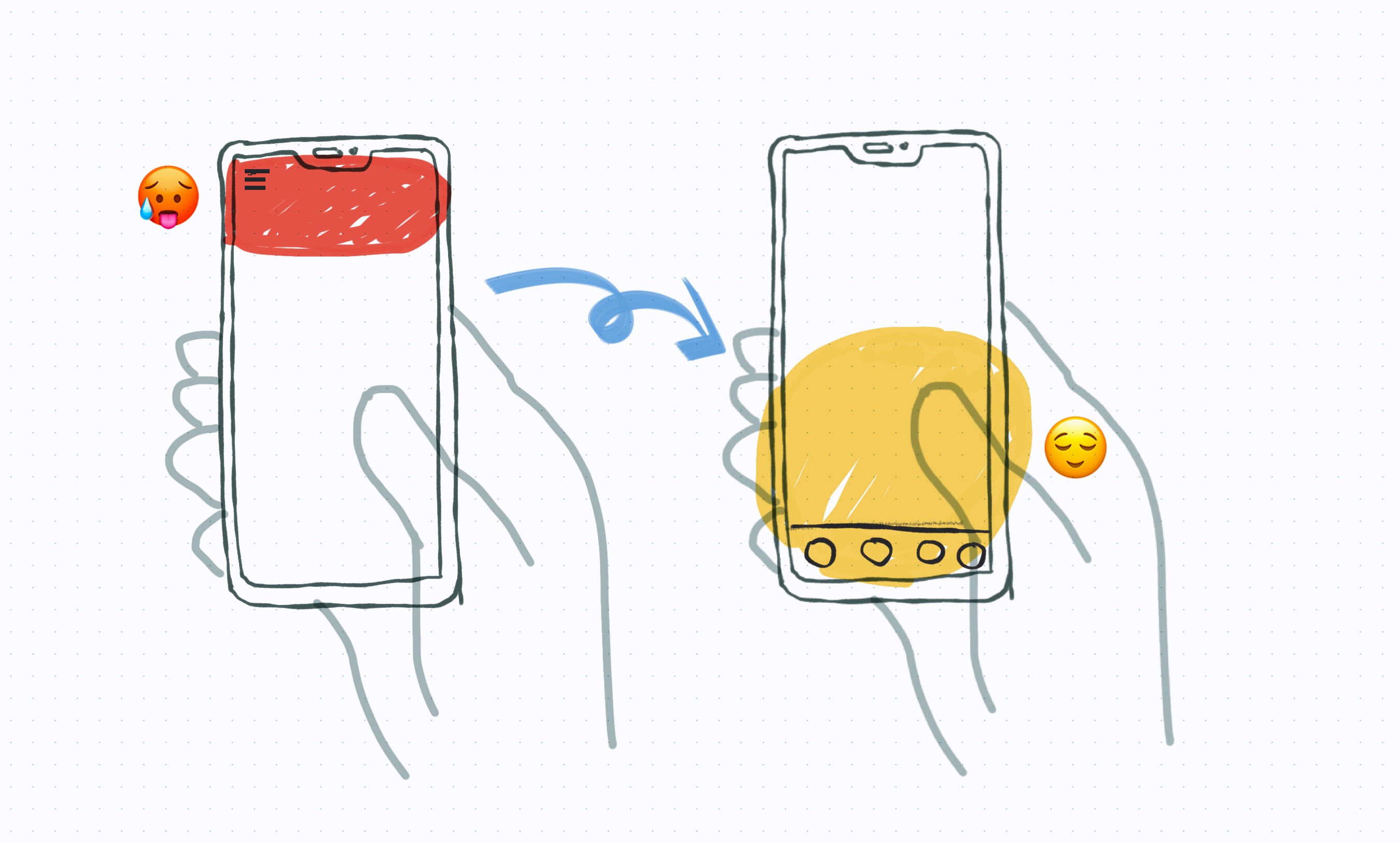
Research shows that approximately 75% of users interact with their phones primarily using their thumbs, making the top area of the screen less comfortable to reach. Since our goal was to encourage exploration across genres, improving reachability and visibility became the core design principle.
As an initial direction, we explored moving genre navigation closer to the lower and central areas of the screen, where users naturally interact more often.
We first considered introducing a bottom tab–based approach, which is widely adopted across mobile apps. This familiarity would help reduce learning costs and ease user adoption.
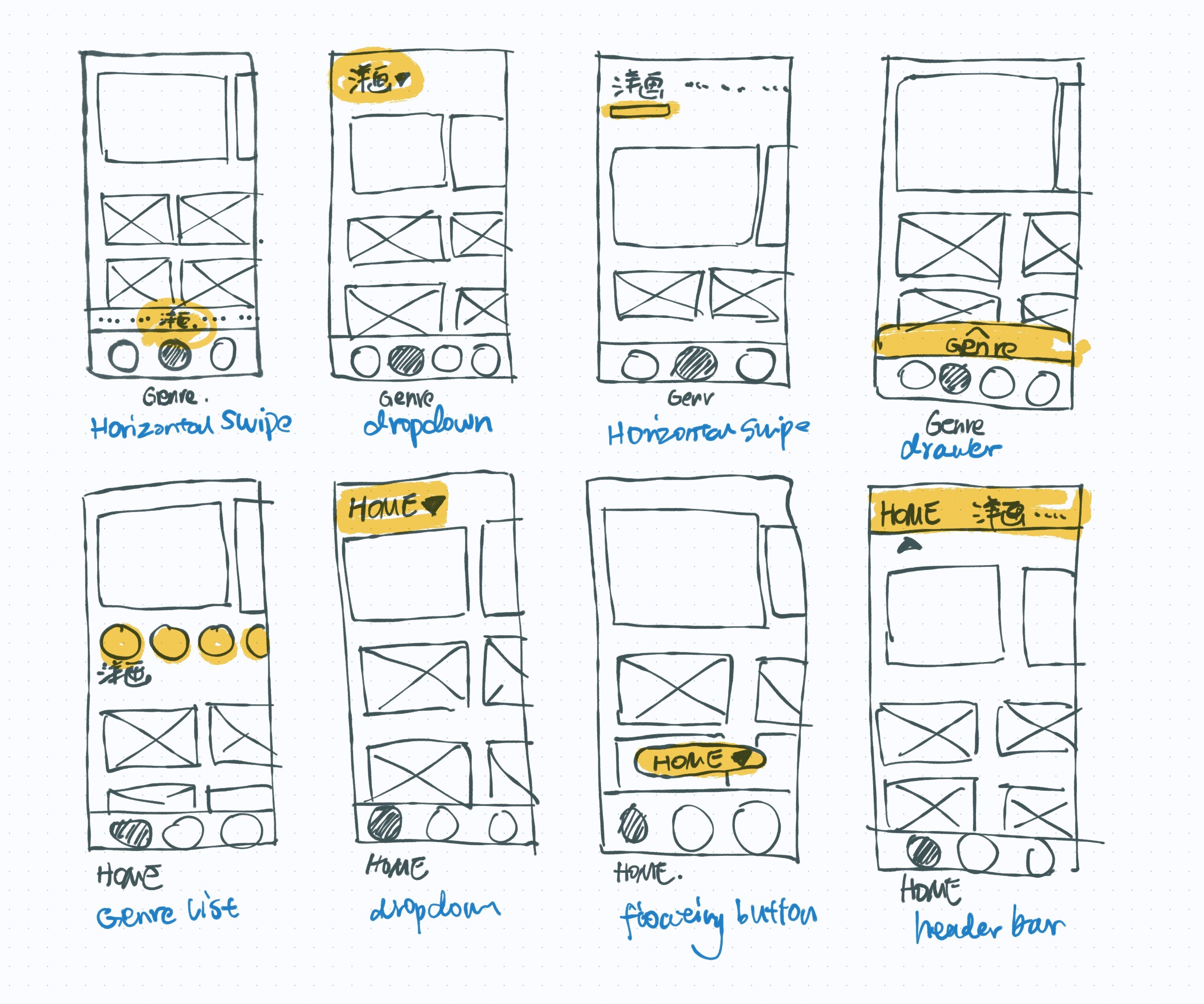
After brainstorming ideas and having meetings with stakeholders, we narrowed it down to three directions
[Wireframes of initial directions]
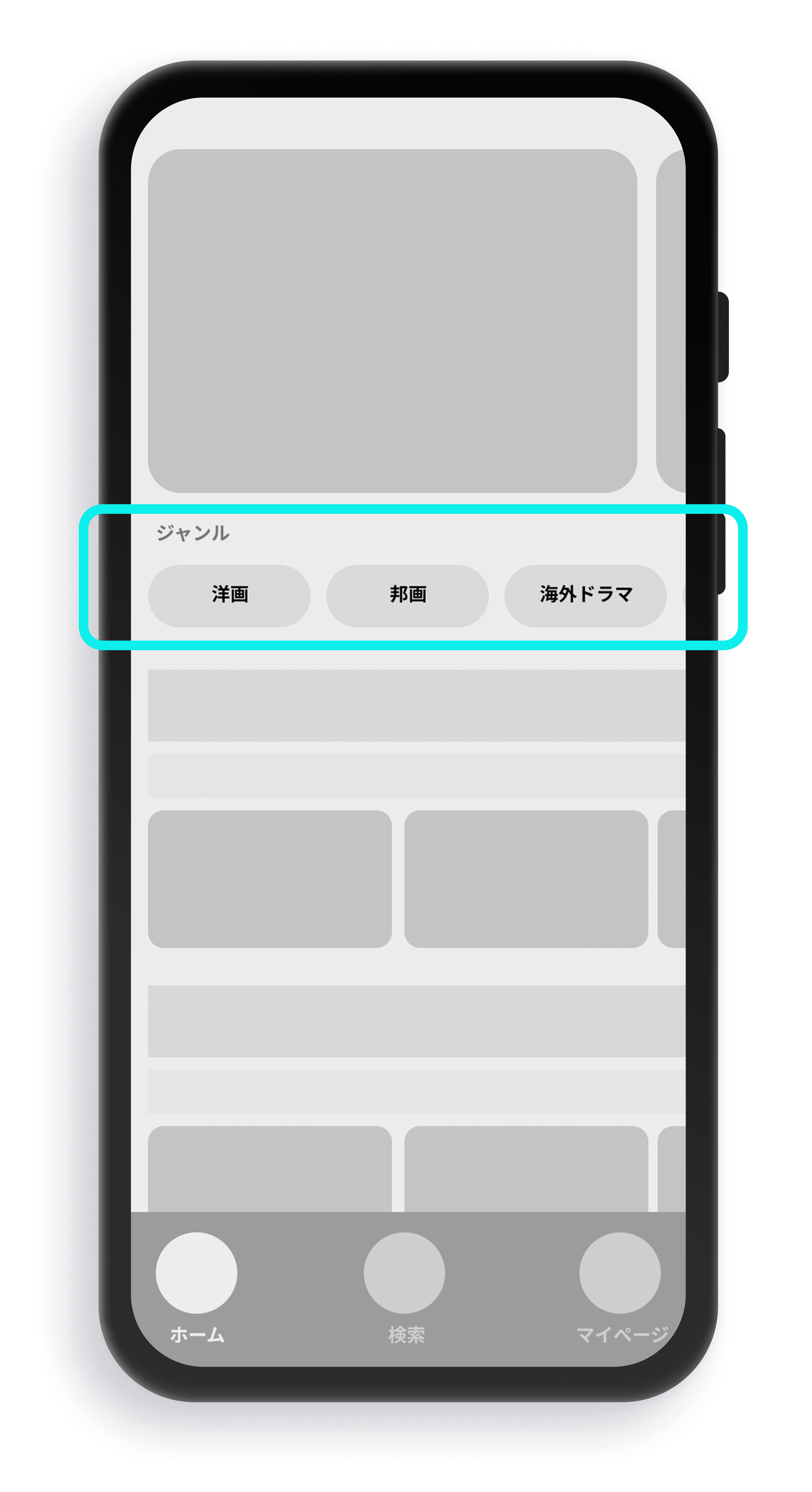
Pros
Highly discoverable on the Home page
Low learning cost, fits existing browsing flow
Cons
Inefficient for frequent genre switching
Requires returning to Home to compare genres
Does not scale well with more genres
Summary
Best for initial discovery, but weak for repeated genre switching.
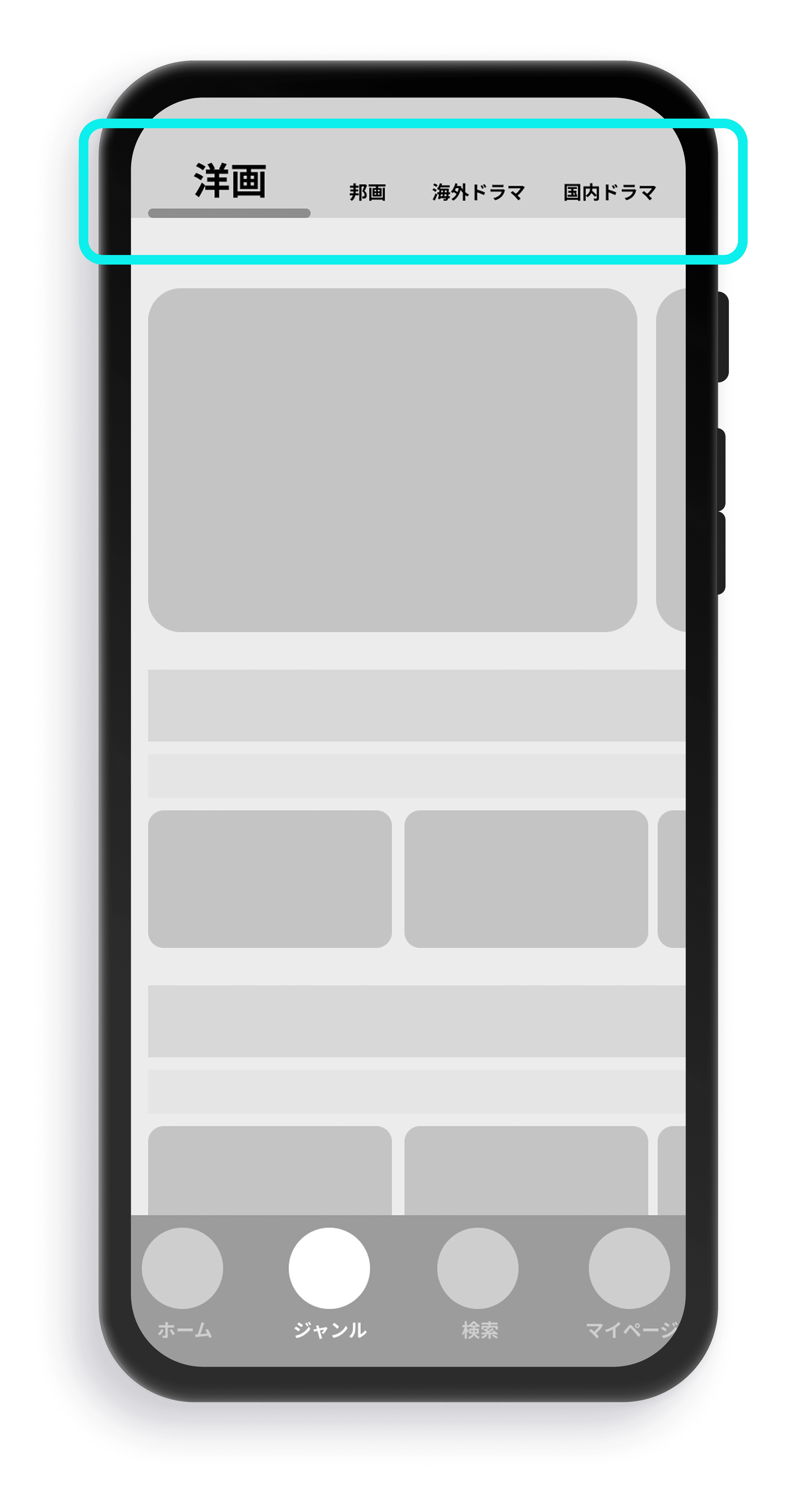
Pros
Fast switching between genres
Genre context stays visible while browsing
Cons
Gesture conflicts with horizontal content carousels
Later genres are less discoverable
Requires clear affordances to indicate scrollability
Summary
Efficient for power users, but introduces gesture ambiguity in content-dense layouts.
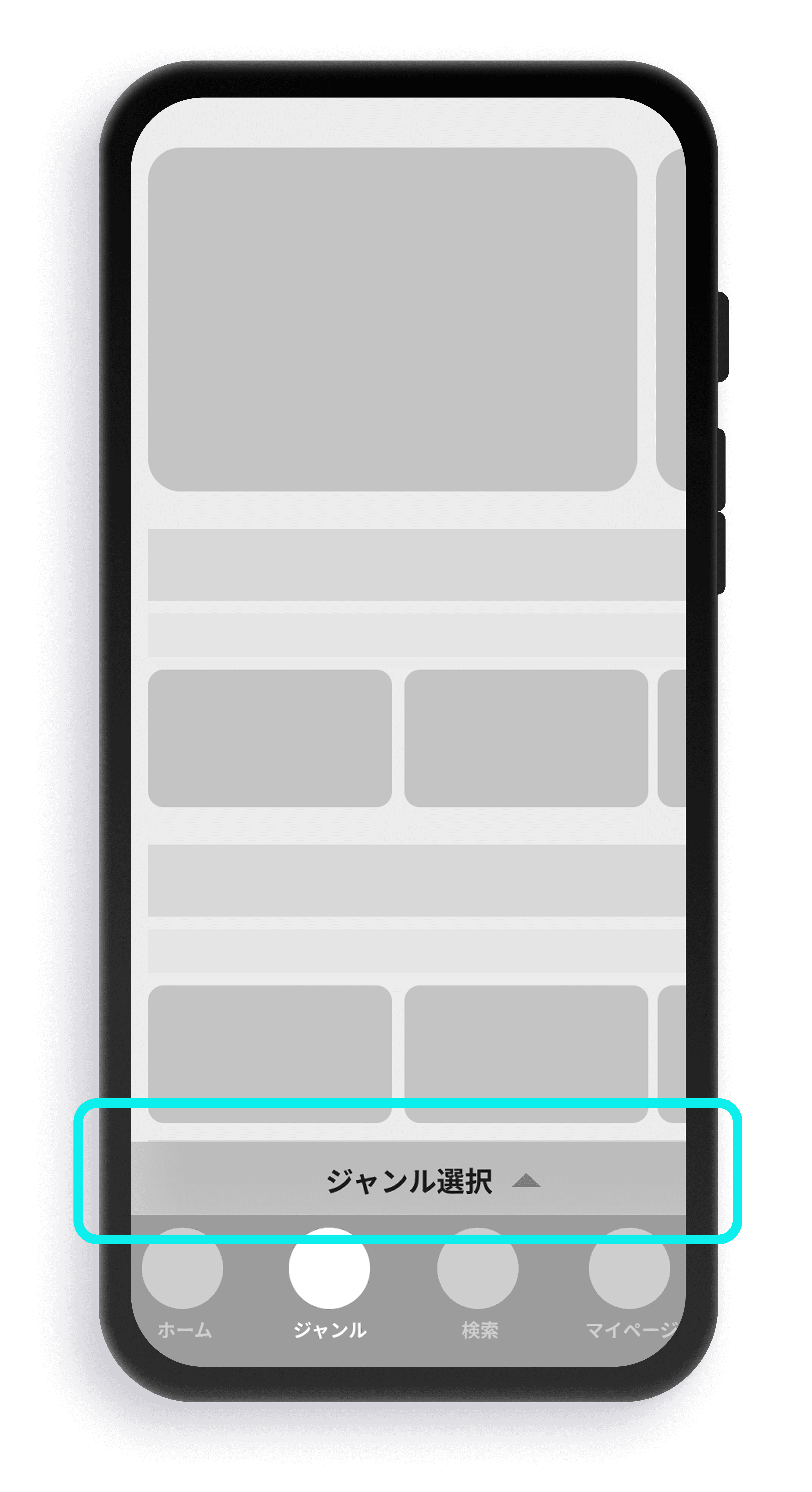
Pros
Thumb-friendly and easy to reach
Exposes all genres at once
Scales well as genre count grows
Cons
Extra step to switch genres
Less familiar interaction pattern
Interrupts browsing flow
Summary
Strong for deliberate selection, but slower for quick comparison.
[05. Prototyping]
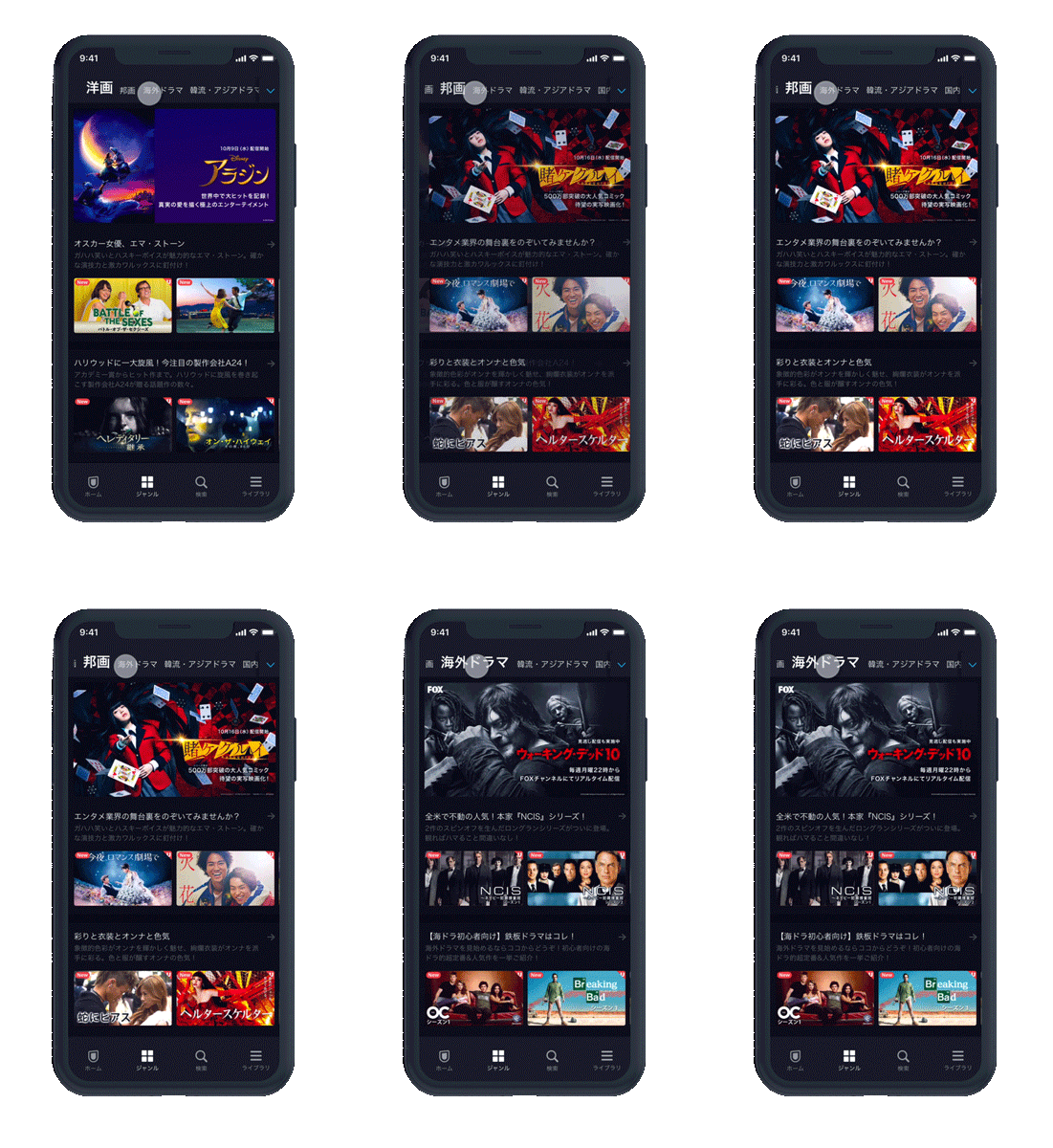
The evaluation revealed a clear trade-off between discovery vs. efficiency, and speed vs. clarity, which informed our decision to move forward with prototyping and testing.
Prototypes made with: Figma, Protopie, Flinto
A. Genre Chips on Home Page

B. Scrollable Genre Tabs
C. Genre Drawer

[06. Testing]
[Method]
To evaluate which genre-browsing pattern best supports discoverability and switching efficiency on mobile, we conducted guerrilla user testing combining task-based usability tests, standardized usability surveys, and qualitative interviews.
This mixed-method approach allowed us to assess both behavioral performance (task completion and speed) and perceived usability across the three design concepts.
Video clip from user testing
[User Testing Process]
1. Introduction & Screening
Participants were briefly introduced to U-NEXT and the purpose of the study. Basic background information was collected, including age, gender, and familiarity with streaming services.
2. Task-based Testing
Participants were asked to complete the same set of tasks using three different prototypes, presented in random order to reduce learning bias:
Find their favorite genre’s top page
Switch to the Manga genre top page
Return to the Home page
3. Usability Survey (SUS-based)
After completing tasks with each prototype, participants filled out a short usability survey using a 7-point Likert scale (1 = strongly disagree, 7 = strongly agree), evaluating:
Ease of completing the tasks
Clarity of the genre-selection design
Perceived speed of interaction
4. Qualitative Feedback
Participants were then asked to share open-ended feedback on each prototype, focusing on what felt intuitive, confusing, or frustrating.
[Test Results Summary]
By synthesizing survey scores and qualitative feedback, we observed a clear preference trend
C (Genre Drawer) > B (Scrollable Tabs) > A (Genre Chips)
This result informed our decision to move forward with Concept C for the next iteration.
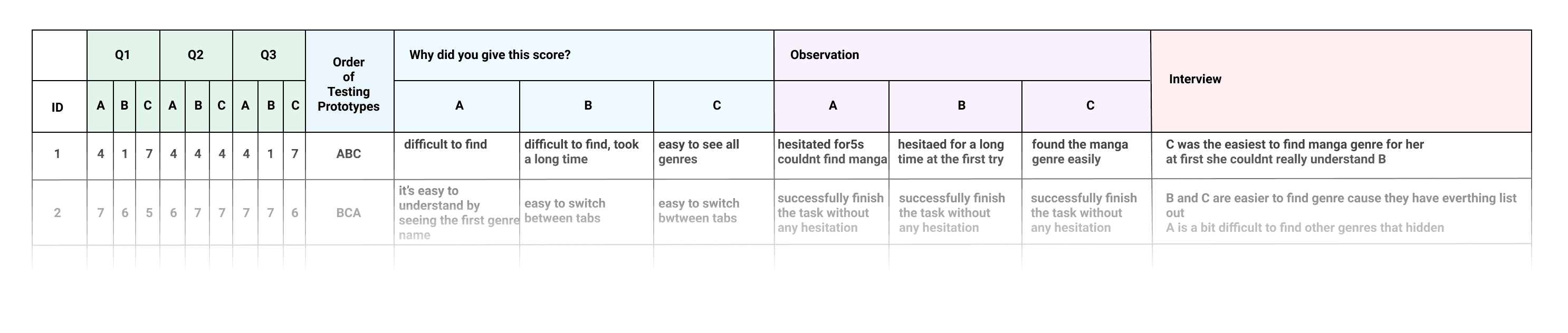
Snippet of test document
[07. Midway Release]
[Narrowing Down & Implementation]
Based on user testing results, we moved forward with Concept C: Genre Drawer and further explored multiple visual and interaction variations to optimize clarity, reachability, and visual integration with the existing UI.
The selected design was released as part of a mobile app update, alongside several additional UX improvements.
[Midway Results]
In the first few weeks after release, genre page visits on iOS increased by approximately 2–3%.
However, this uplift was not sustained and gradually returned to the previous baseline.
[Post-release Analysis]
To understand why the impact plateaued, we reviewed usage data and qualitative signals, which led to several key insights:
Users often start playing content immediately rather than browsing genres
(iOS: ~40%, Web: ~25%)
Many users remain on the Home tab and rarely navigate to secondary tabs such as Genre
Some users may not clearly understand the value of genre-based browsing, especially when recommendations already feel sufficient

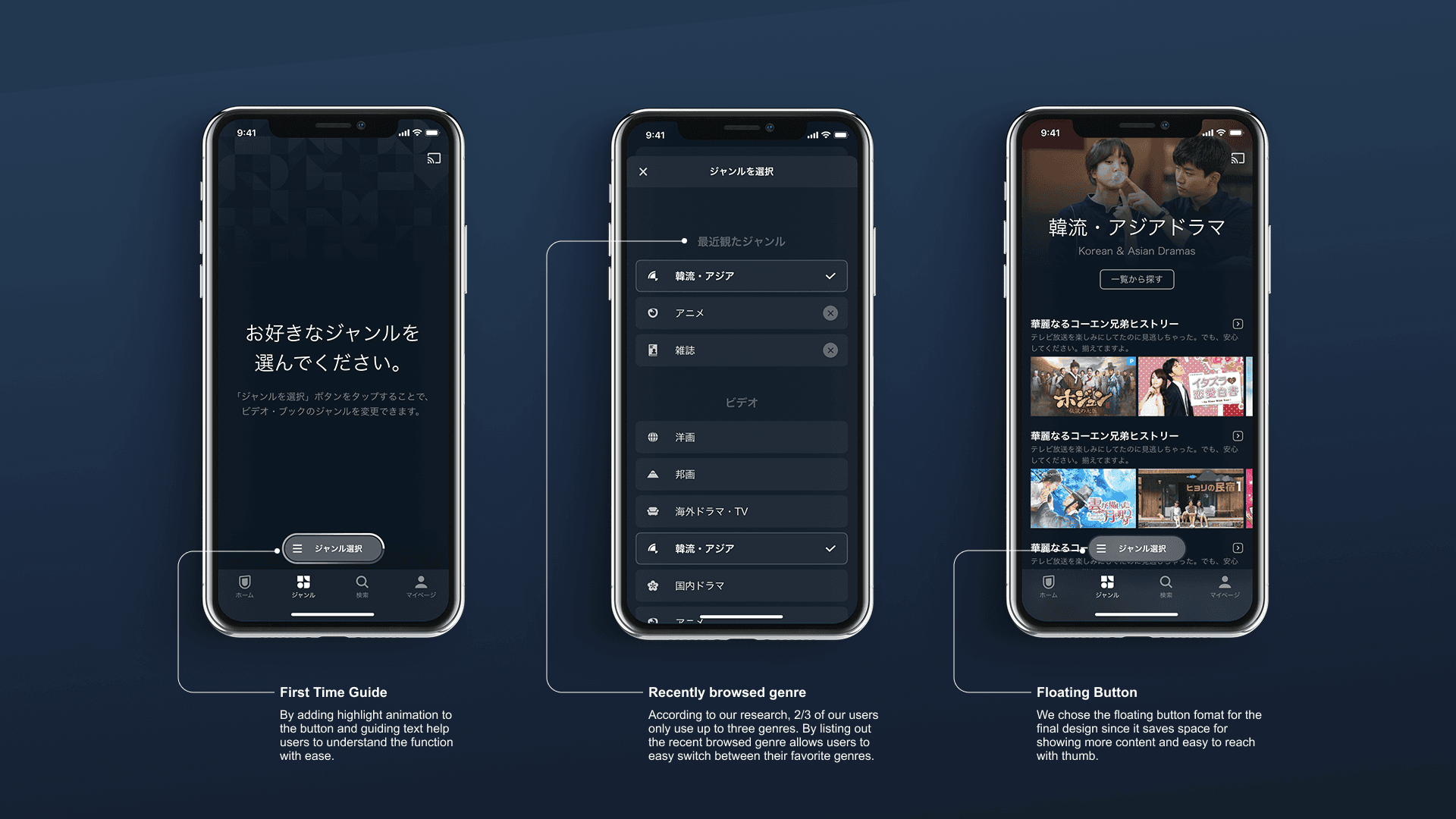
Floating Button on Genre tab
(Released on April 2020)
[Reframing the Problem]
[08. Iteration]
[New Context, New Constraints]
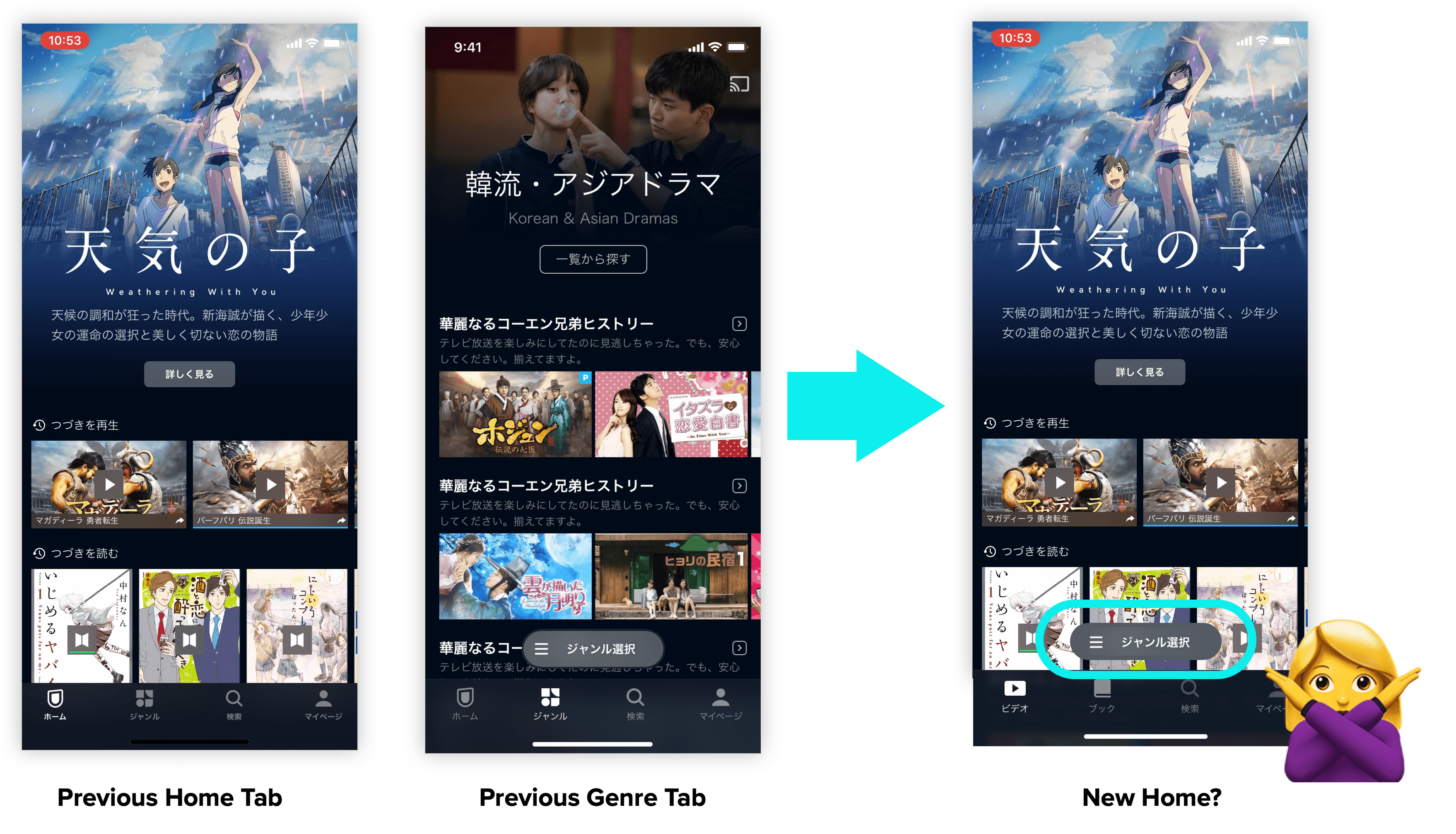
Six months after the midway release, U-NEXT experienced significant growth in its book business. As a result, Books was promoted to a dedicated top-level tab, separate from Video.
This shift fundamentally changed the information architecture:
both Video and Book tabs now required their own genre-browsing experiences.
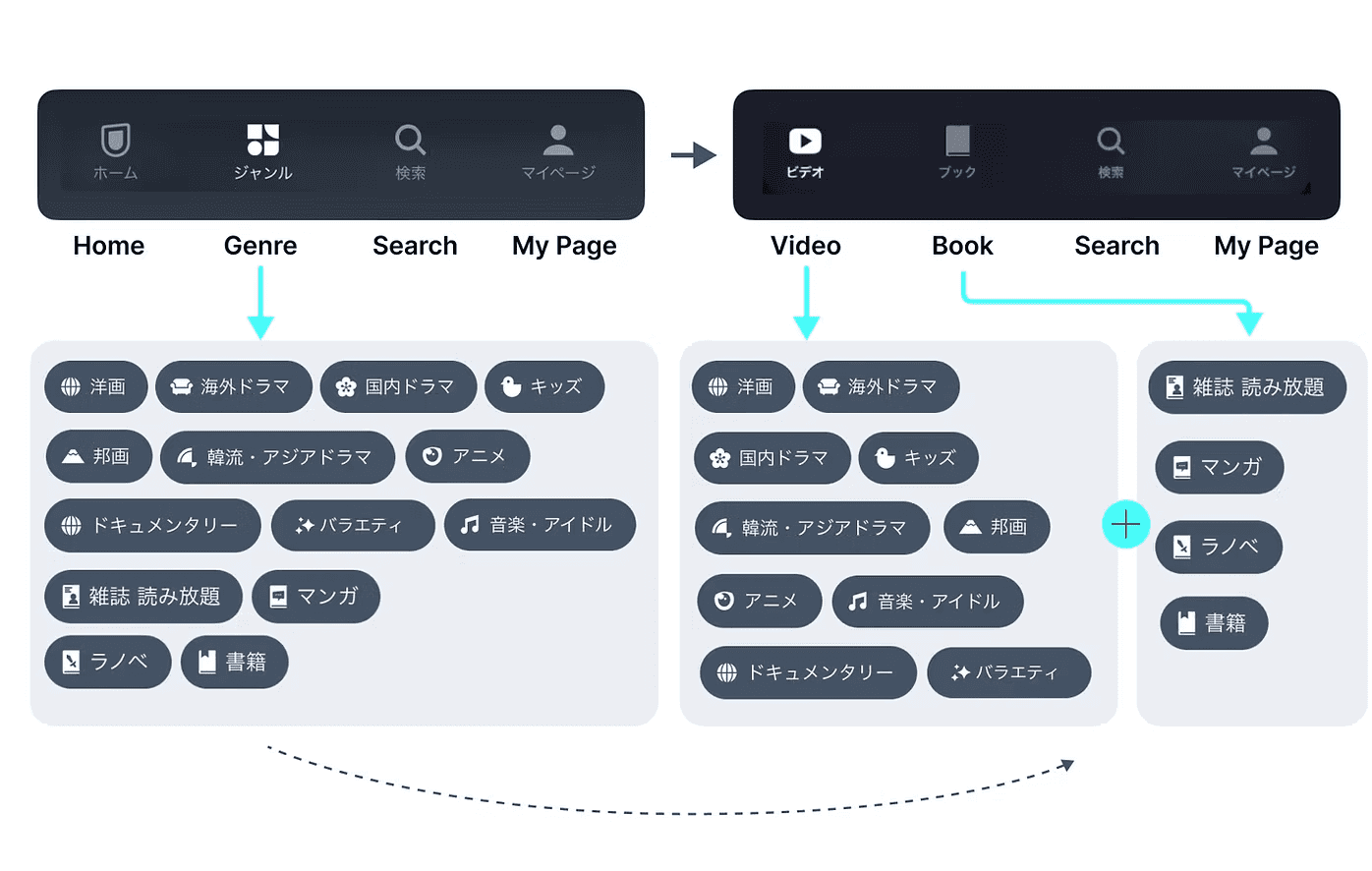
[Revisit the Solution]
Under this new structure, directly reusing the Floating Genre Button pattern was no longer ideal.
Applying the drawer to both tabs would:
Compete with primary content blocks such as Recently Watched
Increase visual and interaction complexity
Reduce content visibility on already dense screens
This led us back to exploring Genre Chips and Scrollable Genre Tabs, this time with clearer constraints, learnings, and data from the previous iteration.

Design explorations on exploring genre Chips and scrollable Genre Tabs
[09. Validation Through Second-round Testing]
[Purpose]
After the second round of ideation, we were unable to confidently choose between Genre Chips and Scrollable Genre Tabs based on qualitative reasoning alone.
The purpose of this study was to quantitatively evaluate which pattern users find more intuitive and easier to recognize.
[Methos]
To reduce subjective bias and focus on instinctive behavior, we conducted a click-testing study combined with a short survey.
Sample Size:
Prototype A (Scrollable Genre Tabs): 100 users
Prototype B (Genre Chips): 100 users
Total: 200 users
Prototype A
(Scrollable Genre Tabs)
Prototype B
(Genre Chips):
[Test]
1. Task
Participants were shown one prototype and asked a single, scenario-based question:
“If you want to find a Japanese movie to watch, where would you tap?”
2. Survey
After the task, participants rated the prototype on:
Ease of recognizing the genre selector
Appropriateness of its position on the screen
Overall ease of use
[Test Results]
The results showed a clear preference for
Prototype B (Genre Chips).
Percentage of users tapping on the correct genre selector
Prototype A: 60%
Prototype B: 85%
[Key Insights]
The higher performance of Genre Chips was mainly attributed to:
Text-based labels, which reduced ambiguity compared to icon-heavy navigation
Central placement on the screen, making the entry point easier to notice during natural scrolling
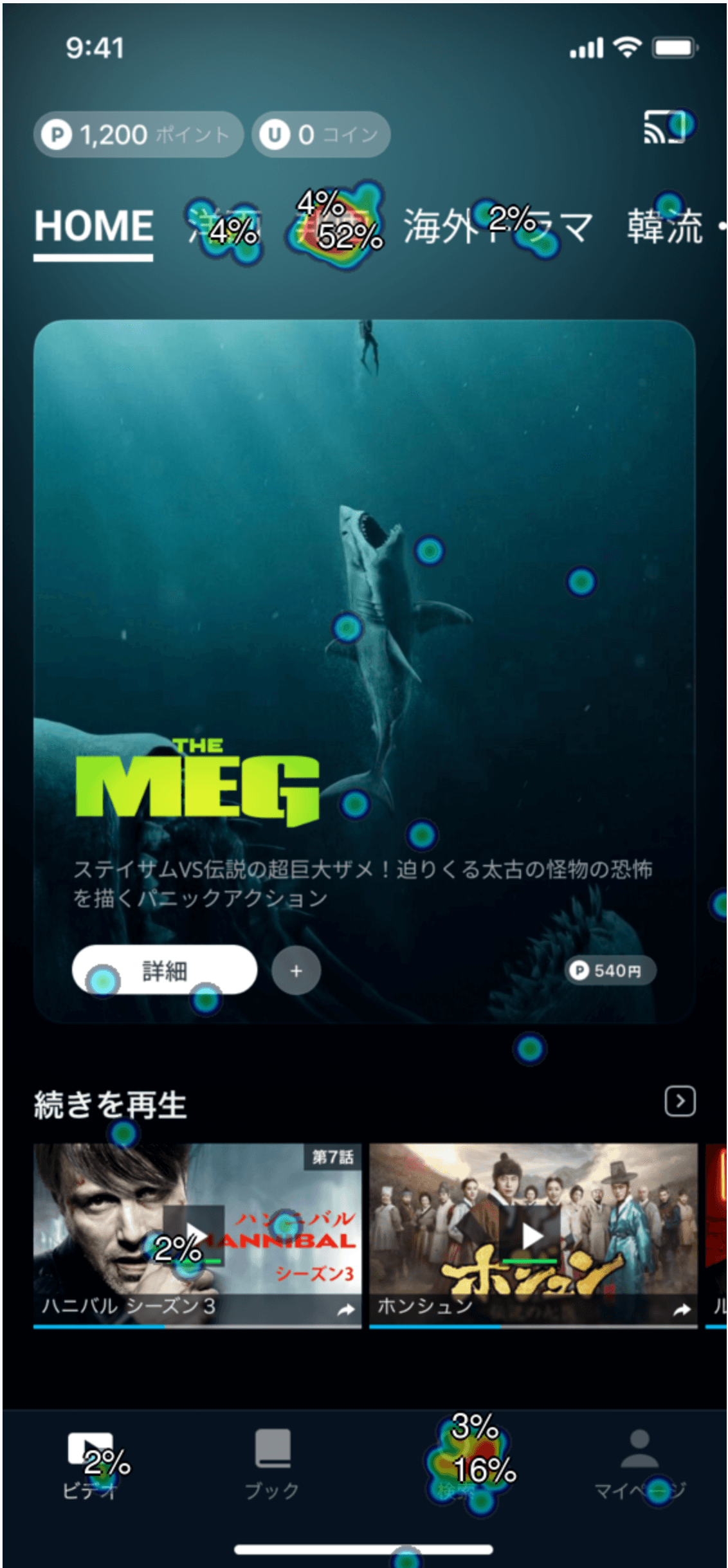
Prototype A
Click heatmap
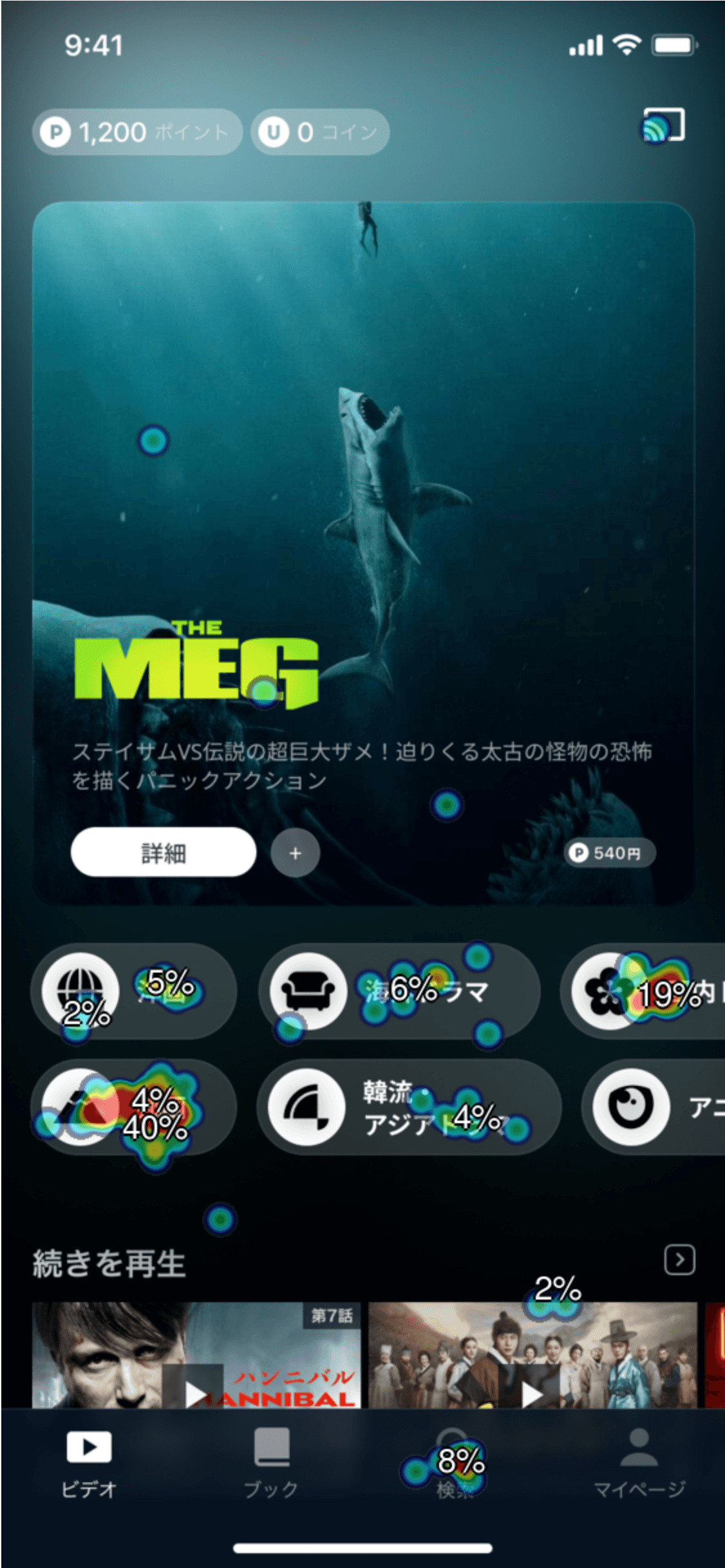
Prototype B
Click heatmap
[10. Final Deisgn & Release]
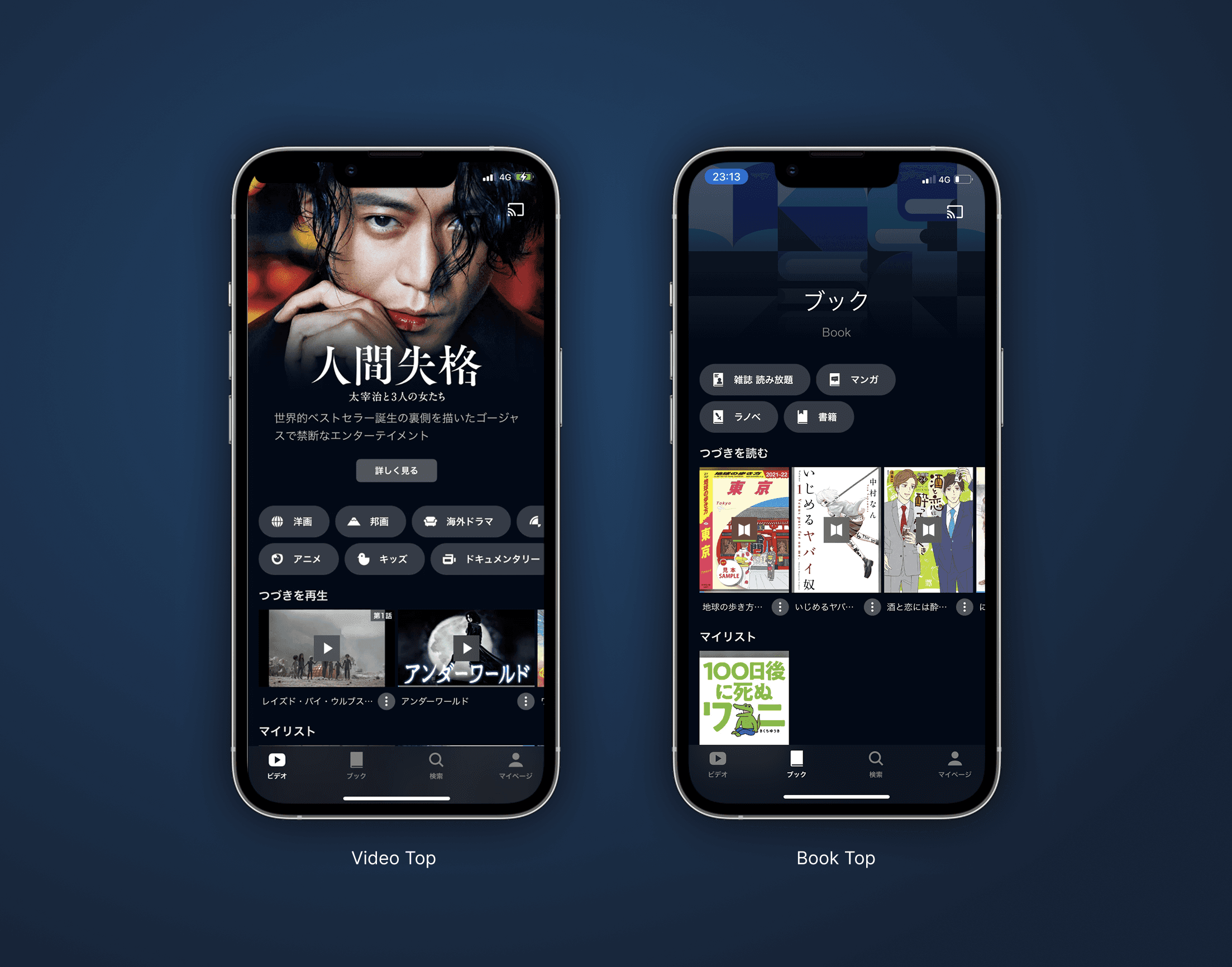
[Results]
Two weeks after release, genre top page visits on iOS increased by approximately 10–15%.
This improvement validated the second-round design decision and demonstrated that lightweight, in-context genre entry points were more effective than heavier navigation patterns under the new information architecture.
[What's Next]
Continue monitoring genre top page visit rate and play rate over a longer period
Evaluate how genre discovery impacts downstream content consumption and retention metrics
Iterate on visual hierarchy and ordering based on usage patterns


Japanese Film
Thank you

International Film
Thank you

Foreign TV Series
Thank you

Documentary
Thank you

Anime
Thank you

Korean Drama
Thank you

Japanese TV
Thank you

Kids
Thank you
Japanese Film
Thank you
International Film
Thank you
Foreign TV Series
Thank you
Documentary
Thank you
Anime
Thank you
Korean Drama
Thank you
Japanese TV
Thank you
Kids
Thank you